
The Timeless Allure of Instant Photography: Fujifilm instax mini 20 Film – Where Memory Meets Moment instant film
| Fujifilm instax | analog photography | tangible memory | photographic ritual —
In an era defined by digital saturation—where thousands of images are captured, edited, stored, and often forgotten within seconds—there exists a quiet revolution in visual storytelling: the resurgence of analog immediacy. At the heart of this renaissance lies the Fujifilm instax mini 20 instant film, a meticulously engineered medium that transforms fleeting moments into tangible keepsakes. This is not merely film; it is a sensory experience, a ritual, and a declaration that some memories deserve to be held—not just viewed.
What sets the instax mini 20 apart is its perfect synthesis of heritage craftsmanship and modern precision. Developed by Fujifilm—a pioneer in photographic science since 1934—the instax mini 20 leverages decades of innovation in emulsion chemistry, light-sensitive layer architecture, and chemical development kinetics. Each sheet contains a self-contained development system: a photosensitive silver halide emulsion layered atop a dye-diffusion transfer mechanism, all sealed within a compact, credit-card-sized frame. When exposed, the film initiates a complex cascade of chemical reactions—within 60 to 90 seconds—that yields a fully developed, permanent image without external processing. No darkroom. No scanner. No cloud storage. Just pure, unmediated alchemy.
The film’s physical design embodies thoughtful human-centered engineering. Its iconic white border—measuring precisely 86 mm × 54 mm with a 62 mm × 46 mm image area—is not decorative excess; it serves as a protective margin against fingerprints, smudges, and accidental exposure during handling. The rounded corners prevent snagging in pockets or albums, while the matte finish on the print surface minimizes glare for optimal viewing under ambient lighting. The backside features a subtle, tactile texture that enhances grip and prevents slippage when stacking or arranging prints—a detail rarely considered but deeply appreciated by collectors and creatives alike.
Photographically, the instax mini 20 delivers a distinctive aesthetic that has become synonymous with authenticity and warmth. Its ISO 800 sensitivity strikes an elegant balance between low-light capability and fine grain control. In well-lit conditions, the film renders skin tones with remarkable softness and dimensionality—avoiding the harsh, flat appearance common in lower-grade instant media. Shadows retain subtle gradation rather than collapsing into voids, and highlights bloom gently, preserving delicate textures in hair, fabric, and foliage. This characteristic “instax glow” is not a flaw; it is a signature—a visual language that whispers intimacy, spontaneity, and emotional resonance.
The color science behind instax mini 20 is particularly refined. Fujifilm’s proprietary pigment formulation ensures vibrant yet natural saturation: reds are rich without bleeding, greens possess depth without artificial neon intensity, and blues retain cool clarity even in overcast environments. Crucially, the film exhibits exceptional color consistency across batches—a rarity in instant photography—thanks to rigorous factory calibration and strict environmental controls during manufacturing. This reliability allows photographers to build cohesive visual narratives across multiple sessions, whether documenting a wedding, a travel journal, or a family gathering.
One of the most profound advantages of instax mini 20 lies in its psychological impact. Unlike digital capture, which encourages infinite repetition (“Let me take one more”), instant film imposes a gentle constraint: each shot is singular, irreversible, and precious. This limitation fosters mindfulness. The photographer pauses, composes deliberately, considers light and expression—not because they fear technical failure, but because they honor the moment’s irreplaceability. Studies in cognitive psychology suggest that physical objects anchor memory more effectively than digital files; holding a printed photograph engages multiple sensory pathways—tactile, visual, even olfactory (the faint scent of developing chemicals)—creating deeper neural encoding. A stack of instax prints becomes a tactile timeline, each image a portal back to the exact temperature, sound, and emotion of its creation.
The versatility of instax mini 20 extends far beyond casual snapshots. Artists integrate it into mixed-media installations, embedding prints within resin, collage, or textile works. Educators use it in classroom exercises to teach composition, light, and narrative sequencing. Wedding planners curate “instant guest books,” where attendees photograph themselves and leave handwritten notes beside their prints—transforming passive observation into active participation. Journalists deploy it in field reporting to create immediate visual records that resist digital manipulation, offering raw, unfiltered testimony. Even scientists have adopted it for rapid documentation in remote locations where power and connectivity are unreliable.
Fujifilm’s commitment to sustainability further elevates the instax mini 20’s value proposition. The film cartridge casing is constructed from recyclable PET plastic, and the paper base is sourced from FSC-certified forests. The chemical developer is encapsulated in a non-toxic, water-soluble gel that dissipates harmlessly upon full development—eliminating hazardous waste streams associated with traditional photo processing. Moreover, the film’s longevity is scientifically validated: properly stored prints retain color fidelity for over 50 years, outperforming many inkjet prints that fade within a decade. This permanence transforms each photograph into a legacy object—a heirloom passed down through generations, carrying not just imagery, but the weight of lived experience.
The cultural significance of instant photography cannot be overstated. In Japan, where the instax concept originated, it is deeply interwoven with mono no aware—the poignant awareness of impermanence. The act of watching an image emerge, pixel by pixel, is a meditation on transience and beauty. Globally, it has sparked communal rituals: “print parties” where friends gather to photograph each other and exchange prints on the spot; street artists who distribute free instax portraits to strangers, fostering unexpected human connection; and therapists who use instant prints as tools for emotional expression in trauma-informed care. The film does not merely record reality—it invites us to co-create meaning within it.
Technically, the instax mini 20 is optimized for seamless integration with Fujifilm’s entire mini ecosystem—including the mini 11, mini 9, mini LiPlay, and mini Evo cameras—but its compatibility extends to third-party devices via standardized film dimensions. Its exposure latitude accommodates both automatic and manual settings, making it accessible to beginners while offering creative control to advanced users. The film’s dynamic range (approximately 5 stops) handles high-contrast scenes with grace, preserving detail in both sunlit faces and shaded backgrounds—a feat many digital sensors still struggle to replicate organically.
Perhaps most compelling is the film’s resistance to obsolescence. While digital formats evolve at breakneck speed—rendering today’s JPEGs incompatible with tomorrow’s software—the instax mini 20 remains universally readable. A print made in 2024 will be as legible and evocative in 2074 as it is today. There is no file corruption, no broken links, no subscription paywalls. It exists outside the digital economy, a sovereign artifact of personal history. In a world increasingly mediated by algorithms and curated feeds, this autonomy is revolutionary.
The emotional resonance of holding a freshly developed instax print is ineffable. The slight warmth of the paper as it emerges from the camera, the faint chemical tang that lingers like nostalgia itself, the way the image deepens in richness over the first minute—these are not incidental details. They are integral to the experience. They remind us that photography, at its core, is not about pixels or megapixels, but about presence. About witness. About love made visible.
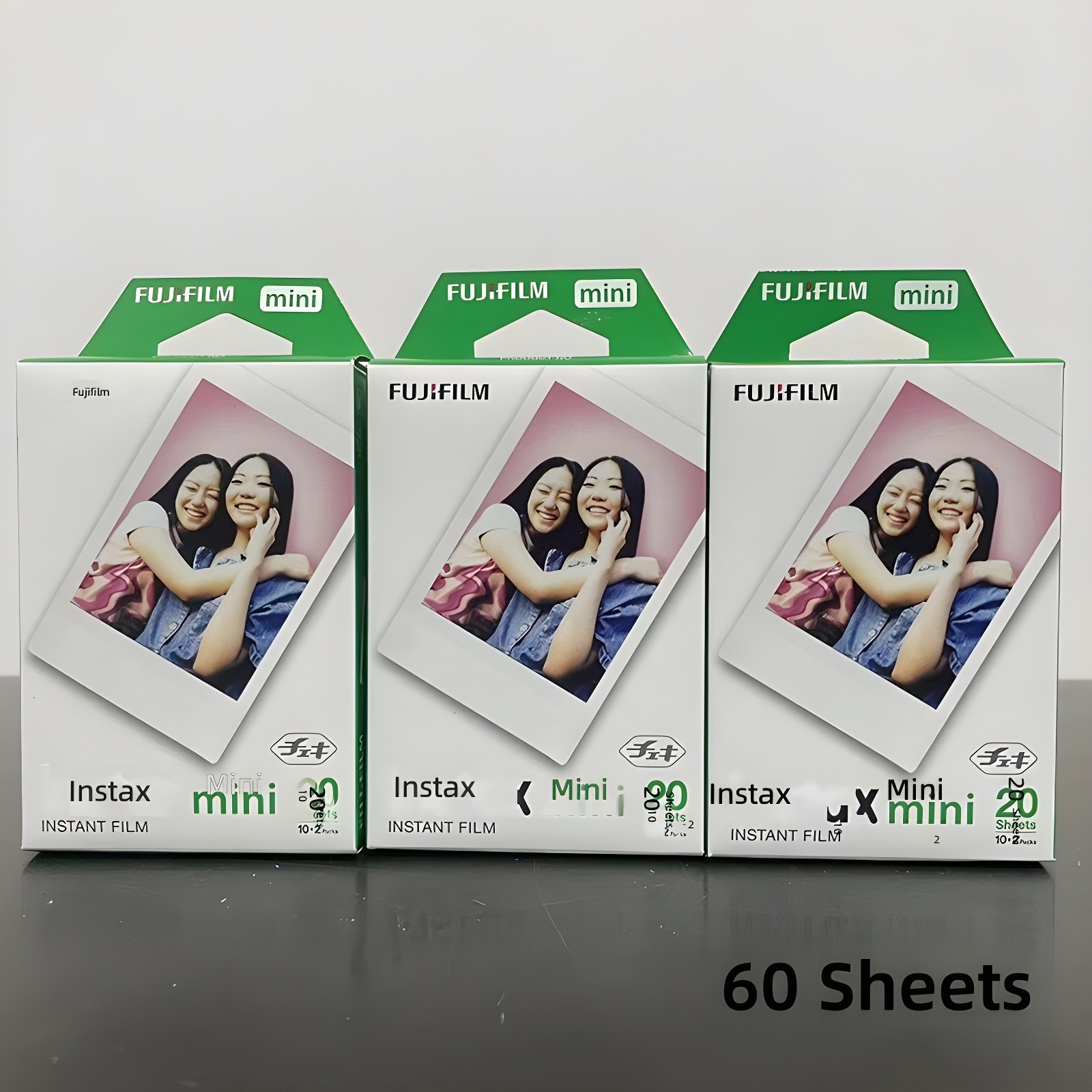
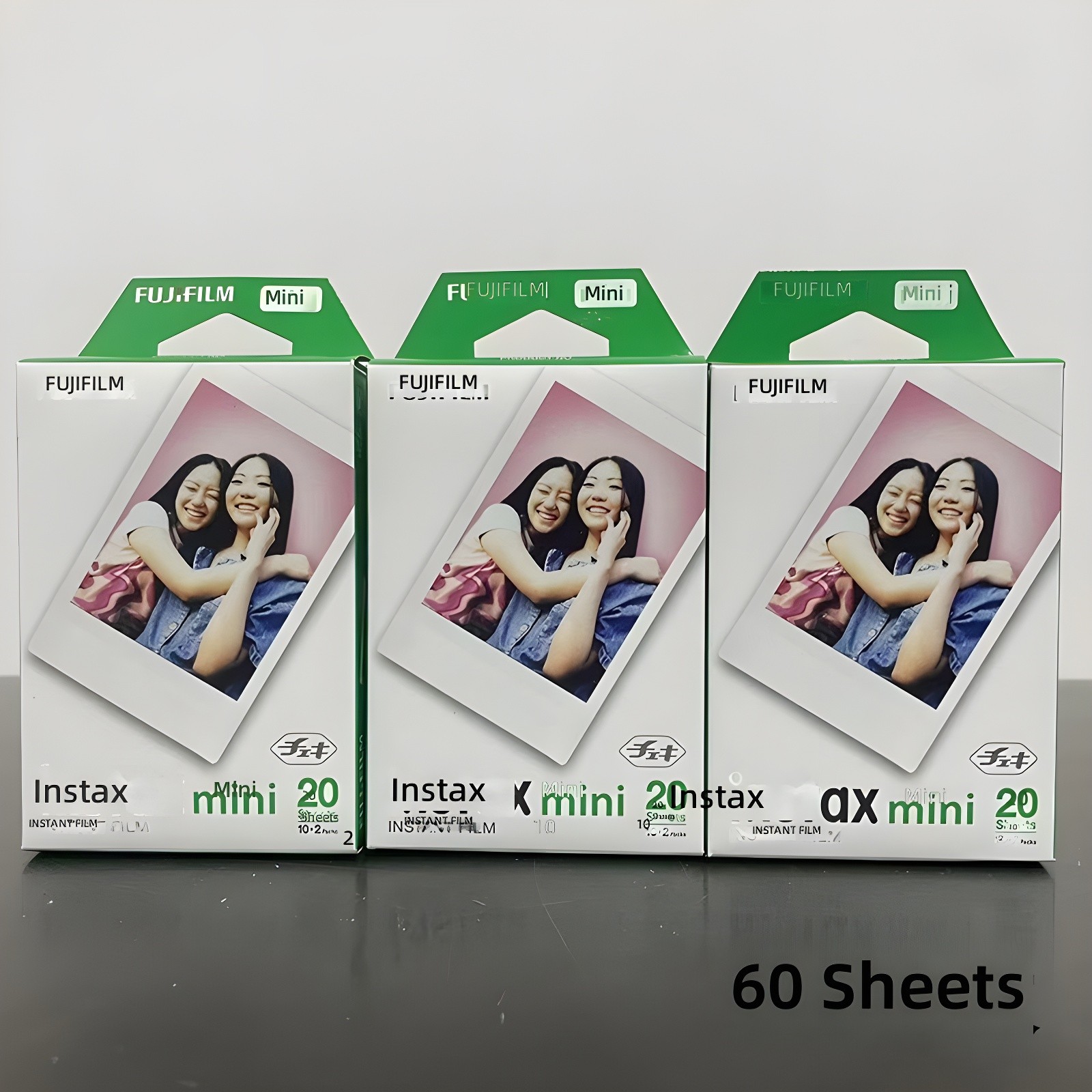
When you load a pack of instax mini 20, you are not inserting consumables into a machine. You are initiating a dialogue between light, chemistry, and intention. You are choosing to slow down. To observe. To cherish. Each of the 20 exposures per pack represents a covenant: a promise to yourself that this moment matters enough to be preserved in physical form. And when three packs—totaling 60 pristine, ready-to-develop sheets—are arranged side by side, they symbolize abundance: not of quantity, but of possibility. Sixty chances to capture joy, grief, curiosity, wonder, and quiet solidarity. Sixty opportunities to build a library of truth that no server crash can erase.
The instax mini 20 does not compete with digital photography; it complements it. It offers a counterpoint—a reminder that technology should serve humanity, not replace it. In its simplicity, it reveals profound complexity: the interplay of physics, chemistry, artistry, and empathy. It is a tool for poets, scientists, lovers, historians, and dreamers—all united by the universal desire to say, “I was here. We were here. And this is how it felt.”
This is more than film. It is a philosophy in emulsion. A manifesto in silver halide. A quiet rebellion against the ephemeral. And in every print it produces, it carries forward a timeless truth: the most enduring images are not those stored in the cloud, but those held in the hand—and kept in the heart.
If you're interested in this product, please click View Product Details.